Control seller releases without losing reserve, return, or ledger state.
Connect processor events, bank returns, ledger reserves, payout approvals, and exception ownership before seller funds leave.
Review marketplace flowFinance operations infrastructure
Control payment operations from request to close.
State, evidence, ownership, and close context stay attached to every money movement.
Qualified operating review
Bring one live payout, settlement, balance, or close path and the evidence already slowing the team down.
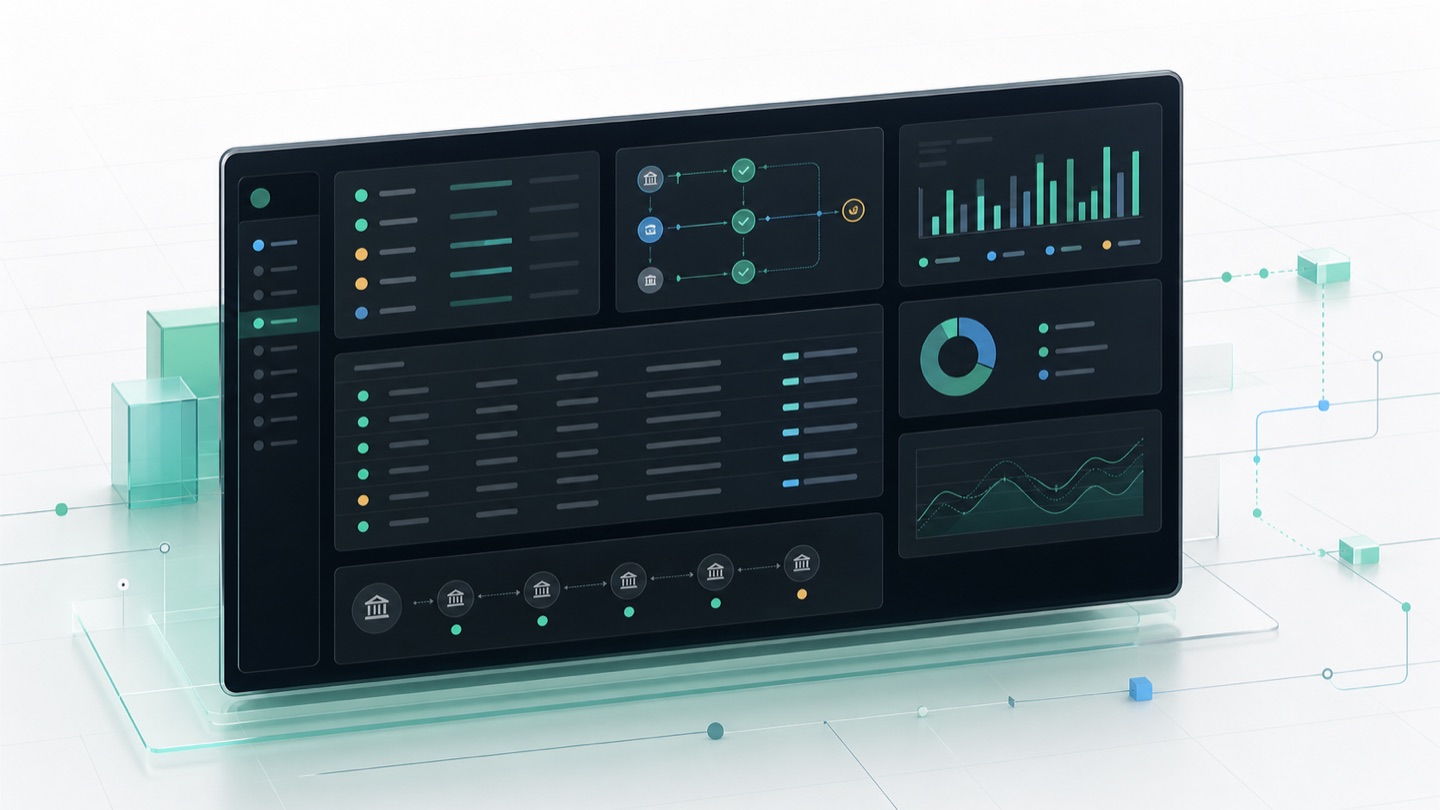
Payment requests carry the entity, rail, counterparty, and approval evidence needed for review.
Expected, pending, settled, failed, and reversed events stay connected to the same movement record.
Finance, product, and support teams work from one queue with clear severity and resolution trails.
Implementation blueprint
Use the first review to turn a live payment path into artifacts finance, product, and implementation owners can approve together.
Two owners missing approval policy and signatory evidence.
The problem
Bank onboarding, payment review, exception handling, and ledger updates often live in separate tools. RunFin gives operations teams a shared source of truth before volume turns into cleanup work.
The solution
Start with a pragmatic operating model: account inventory, approval paths, transaction state, and exception queues. Add direct bank or payment provider integrations as the business matures.
Map your workflow{
"entity": "us-marketplace",
"rail": "ach",
"amount": 48000,
"approval_policy": "dual-control",
"ledger_event": "seller_payout"
}Control plane
Solution workflows
RunFin is most useful when finance has to explain ownership, release policy, rail state, and close evidence across more than one system.
Each review maps the operating model, systems involved, control pressure, and first artifact a team can approve before implementation work expands.
Map your operating modelConnect processor events, bank returns, ledger reserves, payout approvals, and exception ownership before seller funds leave.
Review marketplace flowGive revenue, finance operations, and product teams one record for collection state, refund approval, bank activity, and close inputs.
Map SaaS money flowsDocument disbursement approval, repayment files, bank activity, investor waterfall logic, and borrower exception queues before scale.
Review lending workflowMake batch release, account funding, bank confirmation, contractor remittance, and exception ownership visible before cutoff pressure hits.
Review batch releaseRunFin modules
Payment release, treasury review, exception ownership, and close evidence without operational sprawl.
Ownership, limits, rail eligibility, and review history in one account record.
Approval, release, bank confirmation, and ledger posting on one movement path.
Balances, pending releases, owners, and API events in one clean workspace.
Move failed payments, stale settlements, missing remittance data, and unusual counterparties into owned queues with evidence attached.
Compare expected settlement, bank activity, processor events, and ledger entries before unresolved differences become month-end work.
API surface
Model accounts, counterparties, movements, approvals, ledger events, and reconciliation matches in a schema your finance and product teams can both understand.
POST /v1/movements
{
  "entity": "marketplace_us",
  "source_account": "operating_cash",
  "destination_account": "seller_wallet",
  "counterparty": "cp_8Kf91",
  "amount": 48210,
  "currency": "USD",
  "policy": "marketplace_payout",
  "controls": [
    "dual_approval",
    "balance_check",
    "ledger_reserve"
  ]
}Operating assurance
RunFin is designed around traceability, ownership, and daily close discipline so payment operations can scale without creating a second reconciliation project.
Every release keeps the policy, requester, approver, rail choice, counterparty, and supporting context with the movement record.
Teams can see account ownership, payment thresholds, review paths, and unresolved exceptions before production volume increases.
Expected settlement, bank activity, processor files, and ledger posts share one state model for faster close and cleaner escalation.
Control environment
RunFin should make diligence easier, not create another black box. The operating model is organized around access boundaries, approval evidence, integration scope, and exportable review artifacts.
Entity, account, rail, workflow, and owner boundaries documented before permissions expand.
Roles exportRequester, approver, policy, limit, supporting context, and release decision attached to movement records.
Movement sampleBank, PSP, ledger, file, and API sources listed with read-only or controlled-write posture.
Source registerSettlement files, bank activity, ledger posts, match rules, and unresolved exceptions grouped for review.
Reconciliation exportDocument Cloudflare Pages delivery, CSP, no third-party scripts, dependency surface, and production access path.
Security notesList bank files, ledger events, processor rows, workflow notes, and which fields are needed for the first review.
Field inventoryShow entity, account, workflow, approval, and export owners before any controlled-write path is considered.
Owner matrixDefine escalation owners, launch gates, rollback route, export cadence, and unresolved exception review.
Launch runbookEngagement model
RunFin starts with a concrete operating review, then prices the implementation around workflows, integrations, entities, approval paths, and production volume.
The first call turns one workflow into scope drivers, evidence needs, launch gates, and the commercial path that fits the risk.
Work through the money movement, systems, approval gaps, and close risk before any implementation commitment.
Turn the review into an implementation blueprint that engineering, finance, and operations can approve.
Configure the operating surface, integration boundaries, dashboards, queues, and launch controls for first live volume.
Extend the control model as new entities, currencies, bank partners, products, and review requirements arrive.
Production readiness
RunFin should enter production with evidence already organized: the workflow state model, integration contract, approval owners, close criteria, and rollback path are reviewed before the first live release.
Draft, approved, released, settled, failed, reversed, and matched states mapped to owners.
Bank, processor, ledger, file, and API inputs documented with read-only or controlled-write posture.
Severity, owner, SLA, required evidence, customer impact, and escalation route defined.
Daily match rate, unresolved exposure, bank cutoff, and export package checked before expansion.
Decision questions
RunFin is strongest when the team already has meaningful money movement and needs a cleaner way to control, review, and reconcile the operating state around it.
No. RunFin sits above those systems as the operating layer that connects movement state, approval evidence, reconciliation inputs, and exception ownership.
Yes. Teams can start with read-only exports, files, API events, and workflow samples before deciding where direct write paths or release controls belong.
Bring the payment flow, account inventory, approval policy, bank or processor files, ledger examples, and the exceptions that slow down close.
Each movement keeps the requester, approver, policy, rail, counterparty, limit context, bank activity, ledger event, and reconciliation result together.
The highest-signal group is usually finance operations, a controller or treasury owner, a product/payment lead, and the technical owner for integrations.
If the team has one account, one rail, low volume, and clean monthly reconciliation, the immediate value is probably limited until complexity grows.
Operator dossiers
Each scenario starts as a reviewable operating file: systems involved, pressure points, control checks, and the first output a team can approve.
Marketplace payout teams keep approval policy, rail choice, ledger state, and bank confirmation on one movement record.
Operating review
Bring the workflow carrying release, balance, exception, or close risk. The first review returns the state path, evidence matrix, and implementation boundary.
Privacy posture
RunFin uses the public site and first review request to understand workflow fit, systems involved, timeline, and the control questions a team wants to resolve. The first review does not require production credentials, write access, bank login details, or customer account secrets.
Last updated June 2, 2026. Formal data processing, retention, and confidentiality terms are confirmed in the applicable statement of work or agreement.
Terms posture
The public RunFin site describes an operating model and review process. Any production implementation, controlled-write path, integration work, or ongoing operating program requires a signed scope that names owners, access boundaries, deliverables, pricing, support expectations, and launch criteria.
Questions about privacy, terms, security, or diligence can be routed through hello@runnerconcepts.com.